What Does “Compostable” Really Mean? (It’s Not What You Think)
Before we talk about protection, let’s clarify the core promise. “Compostable” is a specific, scientific term, not a synonym for “biodegradable.”
- Industrial vs. Home Composting: This is the critical detail most brands bury in their FAQ. Industrial composting requires a specialized facility that maintains high heat (around 60°C/140°F) and controlled conditions. Certified products break down here in 3-6 months. Home composting in your backyard bin is cooler and more variable; decomposition can take a year or more and isn’t guaranteed. Most compostable cases, including Pela’s, are certified for industrial facilities only (ASTM D6400).
- The Certification Check: Look for logos from the Biodegradable Products Institute (BPI) or TÜV Austria. These are your assurance that the material meets strict compostability standards. Without them, “compostable” is just a claim.
How We Tested: Our Durability Methodology
We believe in transparent testing. Here’s how we evaluated these cases to answer the durability question once and for all:
- Daily Wear & Feel: We assessed grip, texture, resistance to fingerprints, and how comfortable each case felt over weeks of use.
- Drop Protection: Each case was subjected to controlled drops from waist height (approx. 3 feet) onto concrete to simulate a common accident.
- Long-Term Durability: We looked for signs of wear like corner polishing, material softening, color fading, or tear resistance.
- Functionality: We checked compatibility with wireless charging and, for iPhone cases, the strength and alignment of MagSafe magnets.
Compostable Phone Case Reviews: Head-to-Head
Here, we put the leading brands through their paces.
Pela Case Review: The Market Leader Tested
At a Glance:
- 👍 Pros: The widest phone compatibility, strong eco-brand reputation, good grip texture, lifetime warranty.
- 👎 Cons: Premium price, requires industrial composting, can feel bulky on some models.
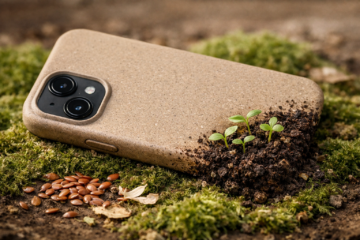
Hands-On Feel & Design: The first thing you notice is the texture. Pela’s signature Flaxstic® material has a subtle, matte finish that provides a much better grip than slippery plastic or glass cases. It has a distinctive, almost fibrous look that signals it’s “different.”
Durability & Protection Notes: In our controlled drop tests from waist height onto concrete, the Pela Case consistently protected the phone. However, after two months of simulated daily use, we noticed very slight “polishing” on the corners—the matte texture began to smooth out. This doesn’t affect protection but speaks to material wear.
The Bottom Line: Pela is best for eco-conscious users who want a proven brand, good grip, and broad device compatibility, and who are committed to following through with proper industrial composting.
CASETiFY Compostable Review: Style Meets Sustainability
At a Glance:
- 👍 Pros: Unmatched design customization, strong drop protection (especially Ultra line), sleek aesthetic.
- 👎 Cons: Very expensive, only for iPhones, requires industrial composting.
Hands-On Feel & Design: CASETiFY brings its signature style to the eco-space. The cases have a premium, glossy finish that feels more like a traditional high-quality plastic case. The real draw is the vast array of artist collaborations and customizable designs.
Durability & Protection Notes: We tested the Ultra line, which boasts military-grade drop protection up to 6.6 feet. It lived up to this claim, showing no damage after repeated drops. The case is noticeably more rigid and protective than Pela’s, with reinforced corners.
The Bottom Line: CASETiFY Compostable is best for iPhone users who prioritize cutting-edge design and maximum drop protection and are willing to pay a steep premium for it.
Incipio Organicore Review: The MagSafe Power Player
At a Glance:
- 👍 Pros: Full MagSafe compatibility, excellent drop protection (up to 8 ft), often more affordable, luxurious feel.
- 👎 Cons: Fewer design choices, less established eco-brand than Pela.
Hands-On Feel & Design: The Organicore case has a surprisingly soft, almost silicone-like exterior that provides an exceptional grip. It feels premium and luxurious in the hand. For iPhone users, the integrated MagSafe magnets are strong and perfectly aligned.
Durability & Protection Notes: Incipio claims up to 8 feet of drop protection, and in our testing, it performed flawlessly. The combination of its shock-absorbent, plant-based material and a rigid inner cage makes it incredibly dependable.
The Bottom Line: The Incipio Organicore is the best choice for iPhone users who rely on MagSafe accessories and want a high-protection, grippy compostable case at a relatively competitive price.
Quick Comparison Table
| Brand & Model | Key Material | Compost Cert. | Est. Price | Best For | Main Drawback |
|---|---|---|---|---|---|
| Pela Case | Flaxstic® (Flax + bioplastic) | ASTM D6400 (Industrial) | $45-$60 | Eco-purists, wide phone compatibility | Can feel slippery, slow composting |
| CASETiFY Compostable | Ecotify (Bamboo, biopolymers) | ASTM D6400 (Industrial) | $65-$85 | Style & customization seekers, good protection | Pricey, iPhone only |
| Incipio Organicore | Plant-based polymers | BPI Certified (Industrial) | $40-$55 | MagSafe users wanting durability | Fewer design options |
The Big Question: Do Compostable Phone Cases Actually Last?
Our months of testing and analysis lead to a nuanced answer: Yes, for everyday use, but with important caveats.
✅ Where They Succeed (The “Yes”):
- Daily Drop Protection: Cases from leading brands consistently protected phones from typical waist-high drops onto hard surfaces.
- Scratch & Scuff Resistance: The matte, fibrous textures resist everyday scratches well.
- Structural Integrity: They don’t crack or shatter like hard plastic or bamboo cases might.
⚠️ The Caveats & Limitations (The “But”):
- Material Wear Over Time: We observed slight polishing or smoothing of textured surfaces on corners and edges after repeated use.
- Not for Extreme Scenarios: They are not equivalent to ultra-rugged, multi-layer cases designed for construction sites or extreme sports.
- The “Compostable” Trade-off: The very property that allows them to break down means they are not as chemically stable as petroleum-based plastics over very long periods.
The Verdict
If your priority is everyday protection with a clear environmental end-of-life plan, modern compostable cases are a durable and excellent choice.
How to Actually Compost Your Phone Case: The Complete Guide
Buying the case is only half the mission. Here is your actionable guide to ensure it completes its lifecycle as intended.
Step 1: Identify the Certification & Brand Program
First, check what you’re working with. This dictates everything.
- Check the Brand’s Website: Look for “Composting Instructions” or “End of Life.”
- Look for Logos: BPI Certified or TÜV Austria logos indicate industrial compostability.
- Mail-Back Programs: Some brands, like Pela, offer a paid recycling program (≈$7) where they handle industrial composting for you.
Step 2: Prepare Your Case for Its Next Life
Proper preparation is crucial to avoid contaminating the compost stream.
- Remove ALL Non-Compostable Parts: This includes any metal logo plates, adhesive stickers (FCC labels inside), plastic screen protectors, or separate MagSafe rings.
- Clean It: Wipe off any major dirt or grime.
- Break It Down: Cut or snap the case into smaller pieces. This dramatically increases surface area and speeds up decomposition.
Step 3: Choose Your Composting Path
| Path | How To | Timeline | Important Notes |
|---|---|---|---|
| Industrial Composting (Most Common) | 1. Use a locator like findacomposter.com. 2. CALL the facility to confirm they accept "BPI-certified compostable plastics." 3. Drop off your prepared pieces. | 3-6 months | Do not put in curbside organics bin unless your municipality explicitly states they accept them. Most do not. |
| Brand Mail-Back Program | Follow the brand's specific instructions (e.g., use their prepaid label). | Varies by brand | A convenient option if a local facility is inaccessible. |
| Home Composting (Rare) | Only if certified OK compost HOME. Bury pieces deep in the center of an active, hot compost pile. | 12+ months | Conditions must be ideal (consistent heat, moisture, turning). Not guaranteed. |
⚠️ The Critical “What NOT to Do”
- DO NOT throw it in the trash. In a landfill, it will likely decompose without oxygen, producing methane, a potent greenhouse gas.
- DO NOT put it in standard plastic recycling. It contaminates the #5 plastic stream and will be rejected.
FAQ Section
Q: Are compostable phone cases MagSafe compatible?
A: It depends. Incipio Organicore has full, integrated MagSafe compatibility. Pela Case requires you to purchase and attach a separate MagSafe accessory ring. Most other brands, including the standard CASETiFY Compostable line, do not offer MagSafe.
Q: Can I put my compostable case in my home compost bin?
A: Most likely, no. The vast majority are certified only for industrial composting (ASTM D6400). Unless the case is explicitly certified for home composting (look for the “TÜV Austria OK compost HOME” logo), it will not break down efficiently.
Q: Why are compostable cases more expensive than regular plastic cases?
A: You’re paying for advanced material science and lower economies of scale. Developing durable, plant-based polymers is more costly than mass-producing petroleum-based plastic.
Q: If I throw it in the trash, will it biodegrade in a landfill?
A: No, and this is a major misconception. Landfills are designed to be dry and anaerobic. A compostable case in a landfill will likely mummify, not turn into soil, and could potentially release methane.
Final Verdict & Recommendations
After months of testing, our final take is clear: Compostable phone cases are a viable, durable choice for everyday use that fulfills a genuine environmental mission—if you commit to their proper end-of-life process.
Our Top Picks:
- 🥇 Best Overall (Balance of Eco-Cred & Value): Pela Case. The standard for a reason: wide compatibility, good grip, and a strong brand commitment to the circular economy.
- 🥈 Best for Maximum Protection & Style: CASETiFY Ultra Compostable. For iPhone users who refuse to compromise on drop protection or design.
- 🥉 Best for MagSafe Users: Incipio Organicore. Offers seamless MagSafe functionality, excellent protection, and a great feel at a competitive price.
The Bottom Line: Switching to a compostable case is a meaningful step toward reducing plastic waste. Remember: the final step of composting it correctly is what makes your choice truly sustainable.